Insight How I Really Feel About ChatGPT from an IP Lawyer’s Perspective
By Bradlee R. Frazer,
Hawley Troxell recently sponsored an AI ChatGPT event to review legal issues and concerns with these new technologies. As such, I developed a list of often-overlooked issues in the realm of intellectual property and contract law that dramatically impact a company’s ability to legally monetize content produced by a generative AI like ChatGPT.
Here is that list:
- You cannot lawfully own or monetize the output of an AI. The output is not your work of authorship under copyright law.
- You cannot warrant the accuracy (defamation?) or noninfringement of the output of an AI.
- The output may infringe someone else’s copyrights or trademarks or patents and you will get sued and have no indemnification.
- Copyright owners and patent holders have no recourse against infringing, illegal AI output since the law has not yet caught up to create a remedy. So if I ask ChatGPT to write me some Star Wars fan fiction and I then place that content on the internet or sell it on Amazon, Disney has no remedy—except to sue me somehow, because they are Disney and have a lot of money.
- If I sell my company or seek an investment round, I cannot assert or warrant during due diligence or in the final contracts that I own any IP created by an AI.
- I will be asking this in my due diligence.
- You similarly cannot make any warranties of title if you license the output to a third-party.
- The notion of “licensing” AI output is a fiction because a license inherently contemplates I can sue an infringer for using my stuff without that license, and here no such right exists. If you sell or license content authored by an AI it is a fiction that you are “licensing” it.
- I cannot patent inventions thought of by an AI unless my prompt somehow rises to the strict level of inventorship.
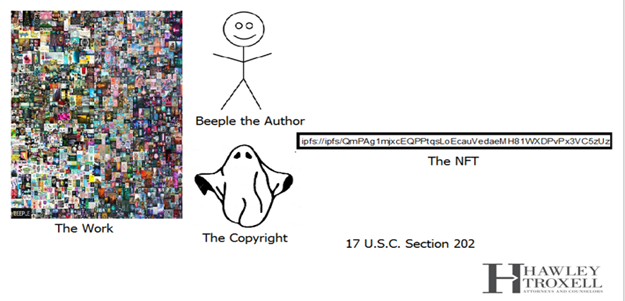
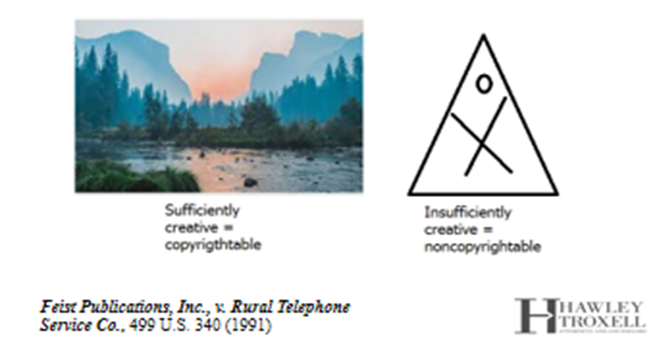
- I cannot register copyrights in content authored by an AI because I am not the author, and the AI cannot register its own copyrights because it lacks personhood.
- Are your contractors using ChatGPT?
- There’s probably no insurance coverage for content written by an AI. There’s either an express exclusion, or the policy does not cover ‘non-employees.’
- FTC disclaimers coming? False advertising?
- Insurance exclusions coming?
- Prompt violates an NDA?
- Data breach and privacy?
- Prompt violates one-year on-sale bar? Foreign implications?
- Internal policies drafted and promulgated?
This article is provided by Hawley Troxell Ennis & Hawley LLP for educational and information purposes only. It is intended to notify our clients and friends of certain events or issues. It is not intended to be, nor should it be, used as a substitute for legal advice regarding specific factual circumstances. © Hawley Troxell Ennis & Hawley LLP all rights reserved.